The phrase "slow living" is frequently misunderstood. It is taken to mean a rejection of ambition, a retreat from the demands of modern life, or an aesthetic preference for linen and sourdough. None of these things are quite it.
Slow living, at its core, is a philosophy of attention. It asks a simple, recurring question: am I actually present for the life I am living? Not moving through it on autopilot, processing it at a distance, or perpetually oriented toward the next thing — but genuinely here, in this moment, for this task.
It is, in this way, inseparable from the concept of ritual.
Speed as the Default
Modern life optimises for speed in almost every domain. Fast food, fast fashion, fast communication, fast news. The productivity culture that dominates professional life measures value by throughput — how much was accomplished, how quickly. Presence, attention, and enjoyment are treated as inefficiencies.
The costs of this acceleration are well-documented: elevated chronic stress, reduced attention spans, what researchers call "continuous partial attention" — the inability to be fully engaged with any single thing because everything is simultaneously available and demanding. The average person now checks their phone 96 times per day. Sustained attention to any single task for more than a few minutes has become unusual.
Where Ritual Intersects with Slow Living
A ritual, by definition, cannot be done quickly. The qualities that make something a ritual — presence, intention, repetition with meaning — are precisely the qualities that speed destroys. You cannot rush a gua sha session and receive its full benefit. You cannot race through the preparation of a meal and taste what you have made. You cannot scroll your phone during meditation and call it meditation.
This is not a limitation. It is a feature. Ritual practices create mandatory islands of slowness in fast days — moments when the pace of internal experience slows to match the pace of the activity. And these islands are, neurologically, where restoration happens.
Research on attention restoration theory (ART) shows that the brain requires periods of low-demand, undirected attention to replenish its executive function resources. A skincare ritual performed slowly, without multitasking, provides exactly this. So does a deliberate cup of tea, a walk without headphones, or the sustained attention of caring for a plant or an animal.
Practical Slow Living: Where to Begin
Choose One Daily Act for Slowness
You do not need to slow down everything. Identify one daily act that currently happens quickly and thoughtlessly, and commit to doing it slowly for one week. The morning coffee. The commute. The lunchtime walk. The skincare routine. One act of deliberate slowness per day creates a template for the experience and shifts the default in a meaningful direction over time.
Remove the Phone from One Ritual
The single most reliable way to transform a routine into a ritual is to remove the phone from it. The skincare routine without a phone becomes a sensory experience. The morning coffee without scrolling becomes a meditation. The walk without podcasts becomes an actual walk. Choose one ritual and protect it from the phone for two weeks.
Create Thresholds
Slow living is supported by physical and temporal markers that signal a shift in pace. The threshold of the bathroom where the evening routine begins. The chair where the morning coffee is always drunk. The time when screens are always put away. These consistent anchors help the nervous system shift gears — they are not arbitrary, but deeply practical cues for changing the quality of attention.
Invest in Quality Over Quantity
One well-chosen skincare tool that you use every day with genuine attention produces different results — and a different quality of experience — than five mediocre ones used sporadically. The slow living philosophy applied to objects means fewer, better things: chosen with intention, used with care, valued for the experience they create as much as the function they perform.
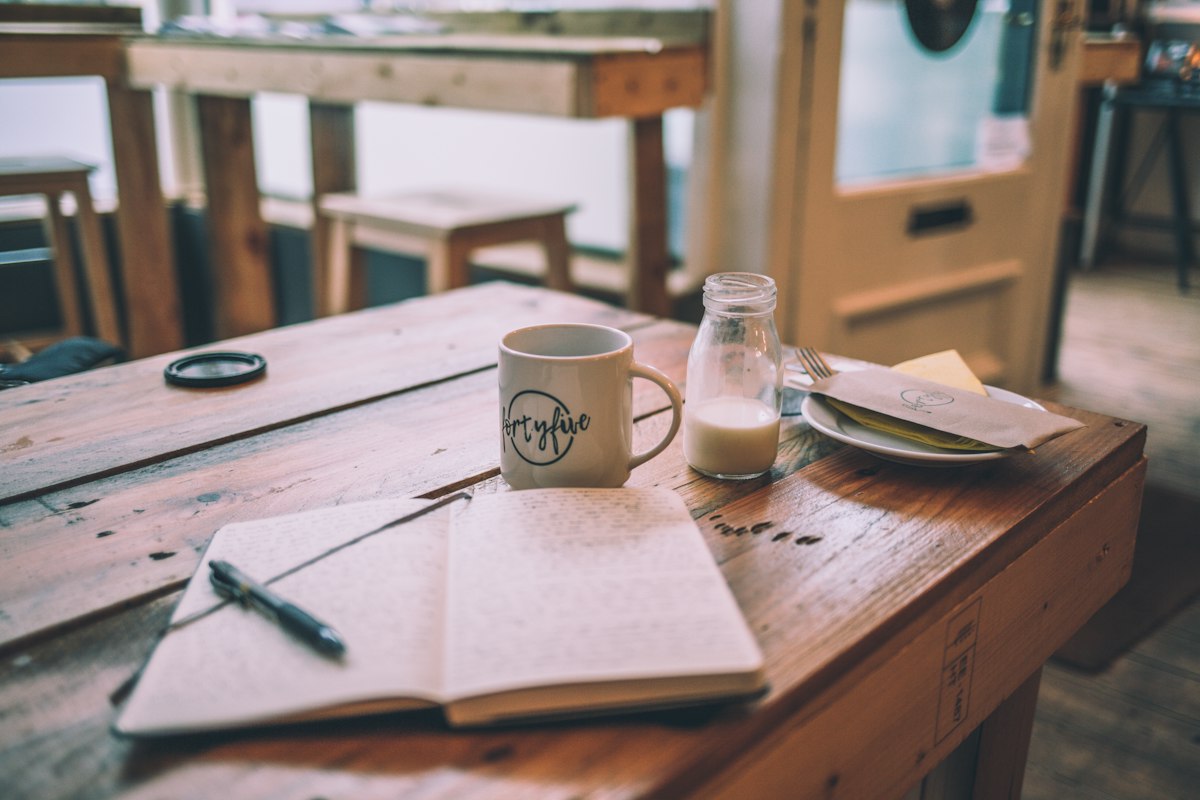
Photo: Unsplash / The texture of a morning held slowly
Slow Living Is Not Passive
One of the most important corrections to make about slow living is that it is not passive, escapist, or antiproductive. The research on deep work, flow states, and creative performance consistently shows that the capacity for deep, sustained attention — precisely what slow living cultivates — is the source of the most meaningful and impactful work people do.
You cannot access flow states while toggling between twenty tabs. You cannot do your best creative thinking in a meeting while checking email. The deliberate slowness of ritual practice is not an escape from the demands of modern life. It is training for the quality of attention those demands actually require.
The Happy Ritual is built for a slower, more intentional approach to daily care. Browse what's possible.
Explore The Collection