There is a particular kind of happiness that arrives unexpectedly — in a moment of connection, in a view that takes your breath away, in news you did not anticipate. This happiness is real and vivid. It is also, almost by definition, unreliable. You cannot schedule it. You cannot build a life on it.
There is another kind of happiness — quieter, more reliable, and far more within our reach. It lives not in peak experiences but in the accumulation of small, intentional acts performed each day with some degree of care. This is what we mean when we say: happiness is a ritual.
The Problem with Happiness as Destination
Much of modern culture frames happiness as something to arrive at — an outcome to be achieved once certain conditions are met. Once the promotion comes. Once the relationship is right. Once the apartment is better. Once I have the body I want. This framing is so pervasive that we rarely question it.
But the psychological research on what is sometimes called the "hedonic treadmill" consistently shows that circumstantial improvements — money, status, material acquisitions — do produce happiness, but not durably. We adapt to our new circumstances remarkably quickly, and our baseline sense of wellbeing returns to roughly where it was before. The destination, once arrived at, is no longer the destination.
This is not nihilism. It is actually an invitation to look somewhere more productive for lasting wellbeing.
What the Research Actually Shows About Sustained Happiness
The science of wellbeing — a field that has grown considerably since Martin Seligman's foundational work in positive psychology — paints a consistent picture. Sustainable happiness is built less from what happens to us and more from how we structure our days. Specifically:
- Consistency of practice matters more than the practice itself. People who regularly do small pleasurable or meaningful activities report higher life satisfaction than those who occasionally do larger ones.
- Attention and savouring amplify positive experience. The same cup of coffee drunk slowly and mindfully produces measurably greater wellbeing than the same coffee consumed distractedly.
- Embodied practices have outsized effects. Activities that involve the body — movement, touch, sensory pleasure — activate wellbeing pathways that purely cognitive activities do not.
- Rituals specifically reduce anxiety and increase performance. Multiple studies, including research from Harvard Business School, have found that ritual behaviours — even arbitrary ones — reduce pre-performance anxiety and increase the sense of control and efficacy.
Taken together, this evidence points toward a particular kind of life architecture: one in which small, consistent, embodied practices are given priority and protection. Not as indulgence, but as the infrastructure of wellbeing.
What Makes Something a Ritual
The word "ritual" carries religious and ceremonial associations — fire, candles, solemn repetition. But at its core, a ritual is simply a behaviour performed with intention, in a consistent way, that carries meaning beyond its immediate function.
A cup of tea can be a ritual if you make it the same way each morning, give it your attention, and allow it to mark the beginning of something. A skincare routine can be a ritual if it is performed not in distracted haste but as a genuine act of care for the body that carries you through each day. Walking the dog can be a ritual if it is the time each evening you allow yourself to be fully present, without agenda.
The content is almost secondary. The intention is everything.

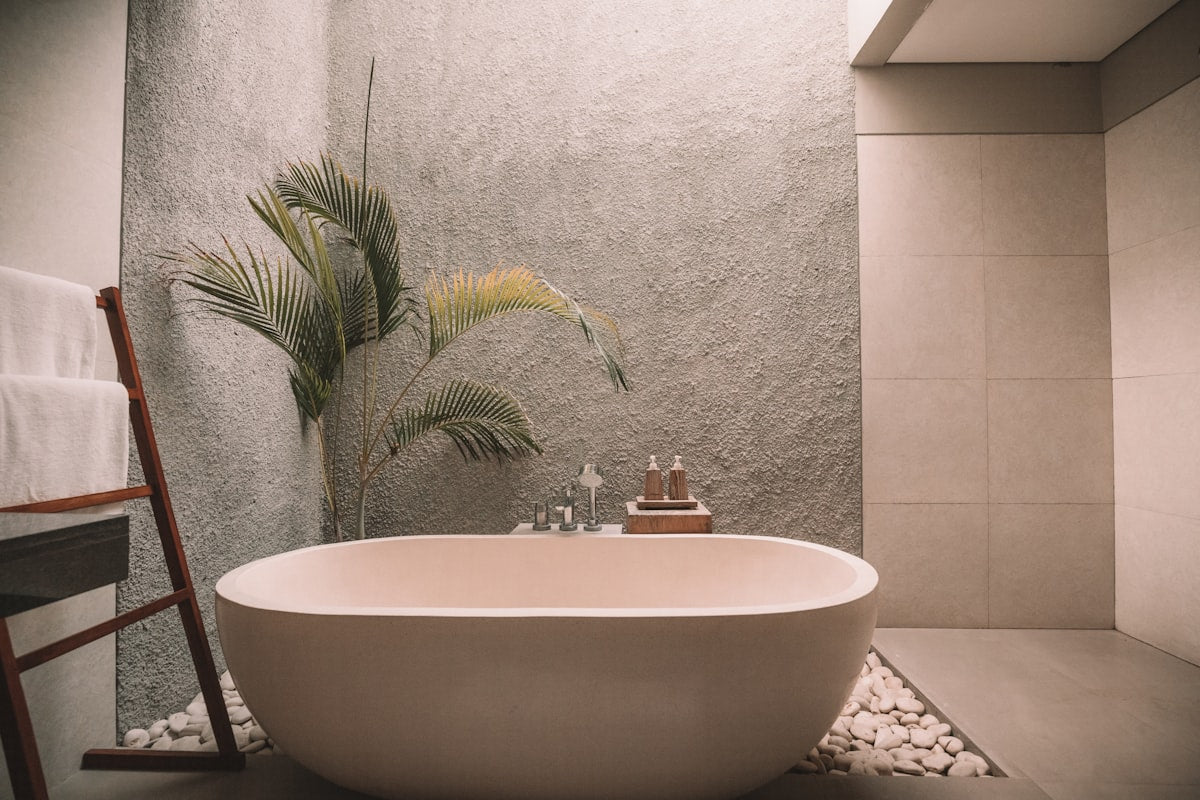
Photo: Unsplash / The quality of a morning held with care
The Role of Care and Beauty
One of the most underexamined contributors to daily wellbeing is beauty — not in the physical appearance sense, but in the aesthetic sense. The presence of beautiful things, created with care, in daily life. This is why humans throughout history have adorned their homes, their bodies, and their rituals. It is why a beautifully designed skincare tool feels different to use than a utilitarian one. It is why the experience of pouring a carefully chosen oil into your palm before a facial massage carries a different quality than reaching for whatever is to hand.
Beauty, encountered and created deliberately, is not frivolity. It is a signal to the nervous system that this moment is worth attending to.
Happiness as Practice
Buddhist traditions speak of happiness not as a feeling but as a skill — something cultivated through repeated action and attention over time. The word "bhavana," often translated as meditation, more literally means "cultivation" or "development." This framing shifts happiness from something that happens to you to something you practise.
This is perhaps the most useful reframe available to modern people exhausted by the pursuit of extraordinary experience: happiness is not the reward for getting everything right. It is the quality of presence you bring to the ordinary things you do each day.
The morning that begins with intention. The meal made with care. The face washed slowly. The small thing done thoughtfully. These are not consolations for the absence of bigger happiness. They are happiness itself.
What This Looks Like in Practice
You do not need to overhaul your life to make it more ritual. You need only begin treating small things with greater intention. Some starting points:
- Choose one part of your morning and commit to doing it slowly, without multitasking, for two weeks
- Invest in one object — a beautiful cup, a good scent, a quality skincare tool — that makes a daily practice genuinely pleasurable
- Remove one habitual distraction (phone at the breakfast table, screen during your skincare routine) and observe what changes
- Notice, once each day, a moment that deserves savouring — and actually savour it
None of this is complicated. All of it is available. The question is simply whether you want to begin.
The Happy Ritual exists to make daily rituals more beautiful, more effective, and more yours. Browse the collection.
Begin Your Ritual